
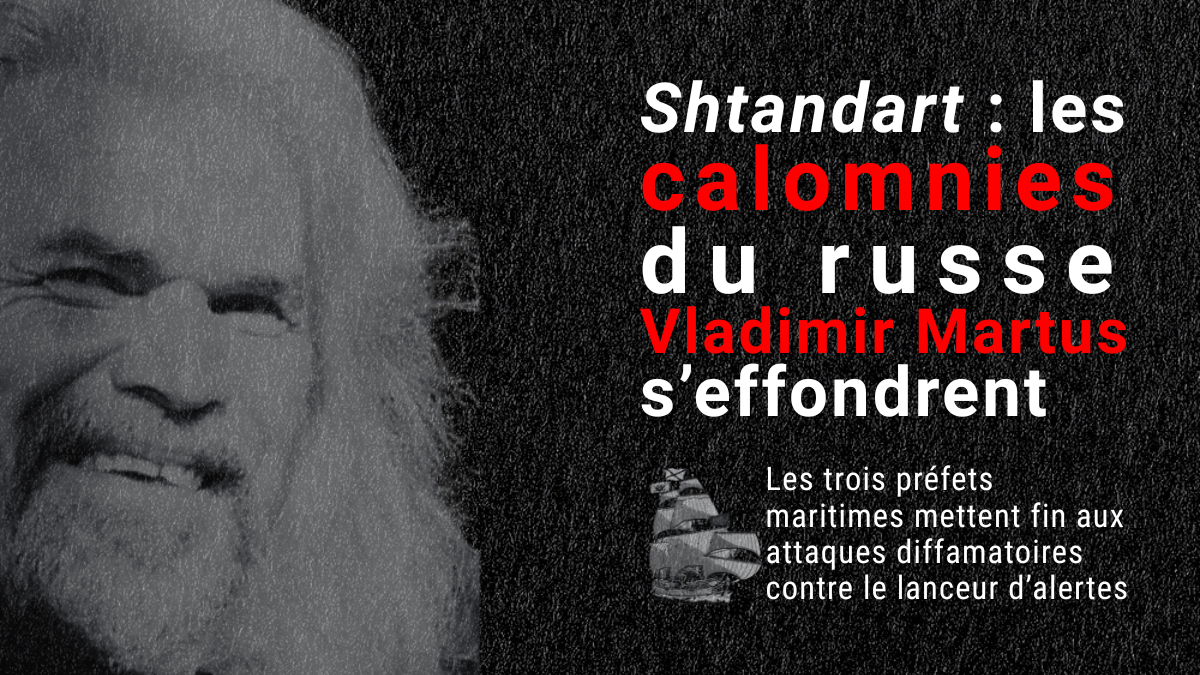
Vladimir Martus essuie une défaite cuisante, les préfectures maritimes françaises rejetant toutes ses attaques diffamatoires contre Bernard Grua. L’arrêté préfectoral du 5 mars 2026 interdit le Shtandart et met en évidence l’échec de ses stratégies juridiques.
Archives de l’étiquette : Ukraine
Amis des grands voiliers : Michel Balique et l’arrêté des préfets maritimes relatif au navire russe Shtandart
Michel Balique, président de l’association « Amis des grands voiliers », a publiquement soutenu la venue du Shtandart (MMSI 518999255) à La Rochelle, après l’instauration des sanctions portuaires européennes. On trouvera ci-dessous le courrier qu’il a adressé aux organisations maritimes auprès desquelles il a assuré la promotion du navire russe. Il y expose sa lecture de l’arrêté interpréfectoral du 5 mars 2026.
Acknowledging the French Maritime Prefects for the 5 March 2026 Order on the Russian Vessel TS Shtandart
On 10 March 2026, an official message of thanks was addressed to Vice Admiral Jean-François Quérat, Maritime Prefect of the Atlantic and Commander-in-Chief of the French Forces in the Atlantic. This letter, signed by the Union of Ukrainians in France, the association Iroise-Ukraine and the collective No Shtandart in Europe, expresses their gratitude to the maritime prefects of Cherbourg, Brest and Toulon for the inter-prefectoral order of 5 March 2026 concerning the Russian vessel TS Shtandart.
Remerciements aux préfets maritimes pour l’arrêté du 5 mars 2026 concernant le navire russe TS Shtandart
Le 10 mars 2026, un message de remerciement officiel a été adressé au vice-amiral d’escadre Jean-François Quérat, préfet maritime de l’Atlantique et commandant en chef des forces françaises en Atlantique. Ce courrier, signé par l’Union des Ukrainiens de France, l’association Iroise-Ukraine et le collectif No Shtandart in Europe, exprime leur reconnaissance à l’égard des préfets maritimes de Cherbourg, Brest et Toulon pour l’arrêté interpréfectoral du 5 mars 2026 relatif au navire russe TS Shtandart.
La Rochelle face aux sanctions européennes : lettre ouverte au député Olivier Falorni sur le cas du navire russe Shtandart
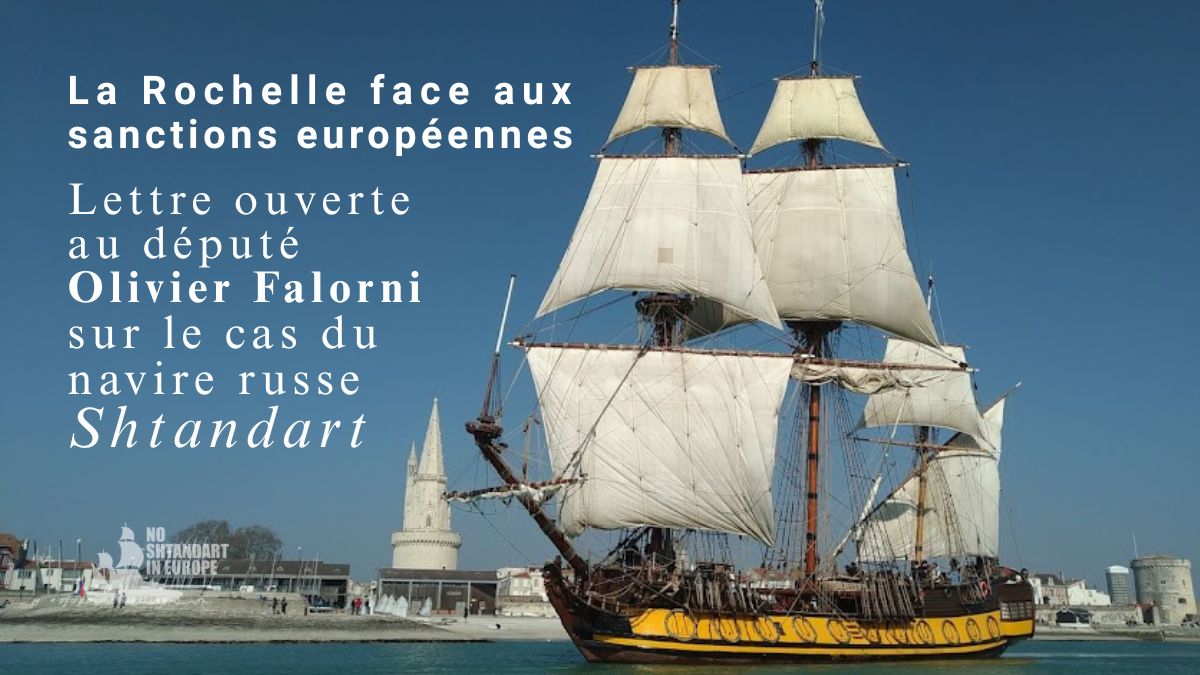
Dans une lettre adressée au député Olivier Falorni, également candidat aux prochaines élections municipales, le collectif No Shtandart in Europe demande une clarification publique sur l’application du droit européen dans le dossier du navire russe Shtandart.
Autopsy: an emblematic militant narrative of the Russian ship « Shtandart »
For more than three and a half years, the Russian ship Shtandart has been the subject of a French peculiarity that persists, while other European countries have resolved it in a matter of weeks. The case of ‘Caeso Fabius Gallus’ (sic), alias ‘Fabio Caeso Gallus’, is an example of discourse that has been repeated forLire la suite « Autopsy: an emblematic militant narrative of the Russian ship « Shtandart » »
Note d’information : Affaire du navire russe « Shtandart » et rôle de l’ambassade d’Ukraine en France
La présente note présente les démarches entreprises depuis 2022 par le collectif pan-européen No Shtandart in Europe, ainsi que l’absence persistante d’implication des services diplomatiques de l’Ukraine en France, en contraste avec l’action déterminée d’autres ambassades ukrainiennes en Europe. Elle intervient dans un contexte juridique désormais clarifié par les juridictions nationales françaises et par la Cour de justice de l’Union européenne.
Rapport – Navire russe « Shtandart » : exclusions et restrictions d’escales en Europe en 2025
En 2025, le navire russe Shtandart a été soumis à des restrictions sévères en Europe en raison de sanctions, entraînant l’interdiction d’accoster dans sept pays. Malgré quelques escales limitées à La Rochelle, son isolement opérationnel s’est intensifié, illustrant l’efficacité des mesures mises en place par des autorités et collectifs nationaux.
Mémorandum sur la participation des acteurs ukrainiens et de la diaspora ukrainienne dans l’affaire du navire russe «Shtandart» (2022–2025)
Ce mémorandum a pour objectif d’illustrer la participation constante d’acteurs ukrainiens, tant en Ukraine que dans la diaspora, à la mobilisation visant à empêcher les tentatives de la frégate russe Shtandart visant à contourner les sanctions de l’Union européenne.
Request for intervention by the European Commission regarding a failure to implement EU port sanctions in France (Morbihan and Charente-Maritime)
This letter to the European Commission calls for its intervention in view of the French authorities’ inability to enforce the EU’s port sanctions, while other Member States are strictly implementing them. To this end, it documents the Shtandart’s stopovers in La Rochelle, its participation in the 2025 Gulf Week and the risk of further stopovers in spring 2026.
 Bernard Grua - No Shtandart In Europe