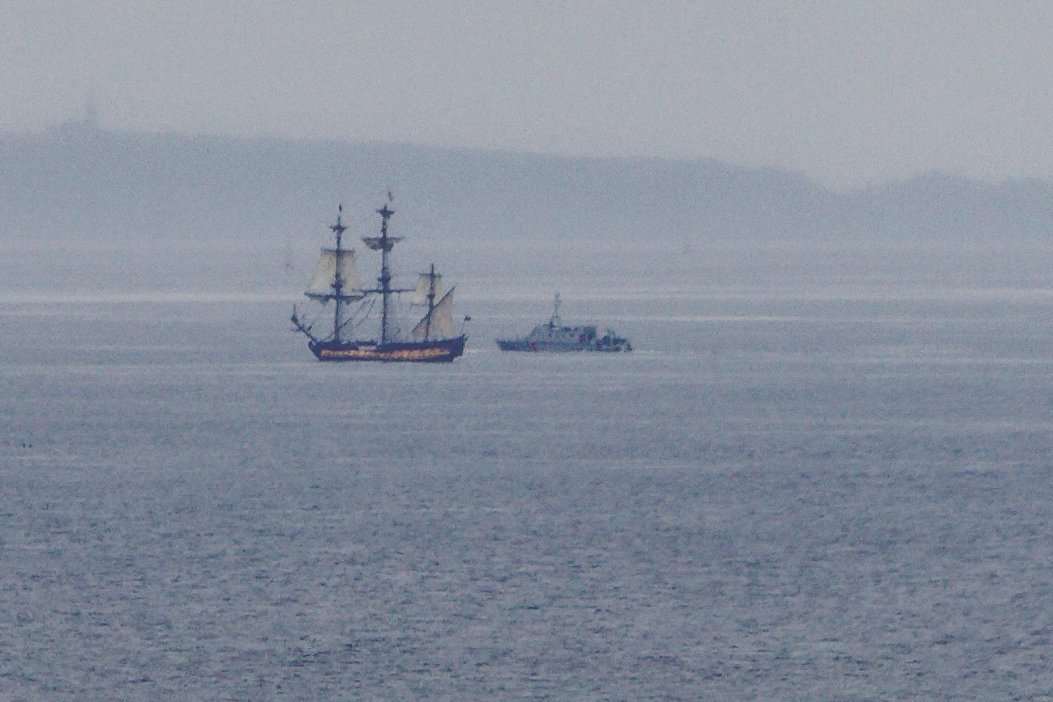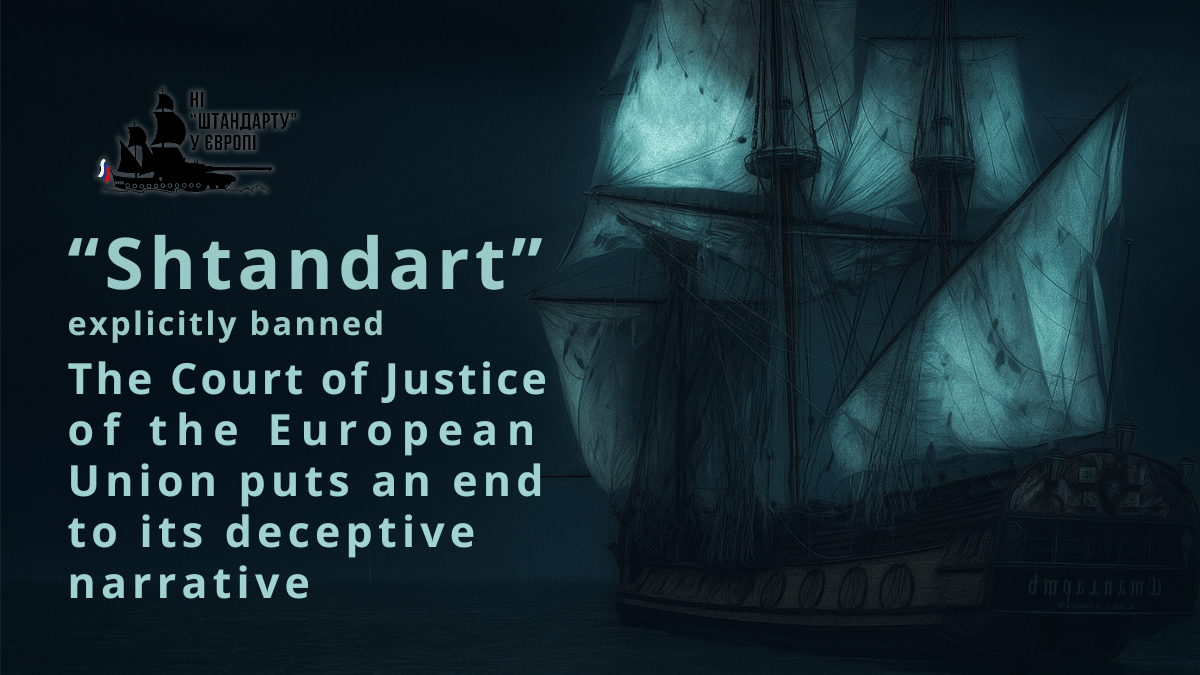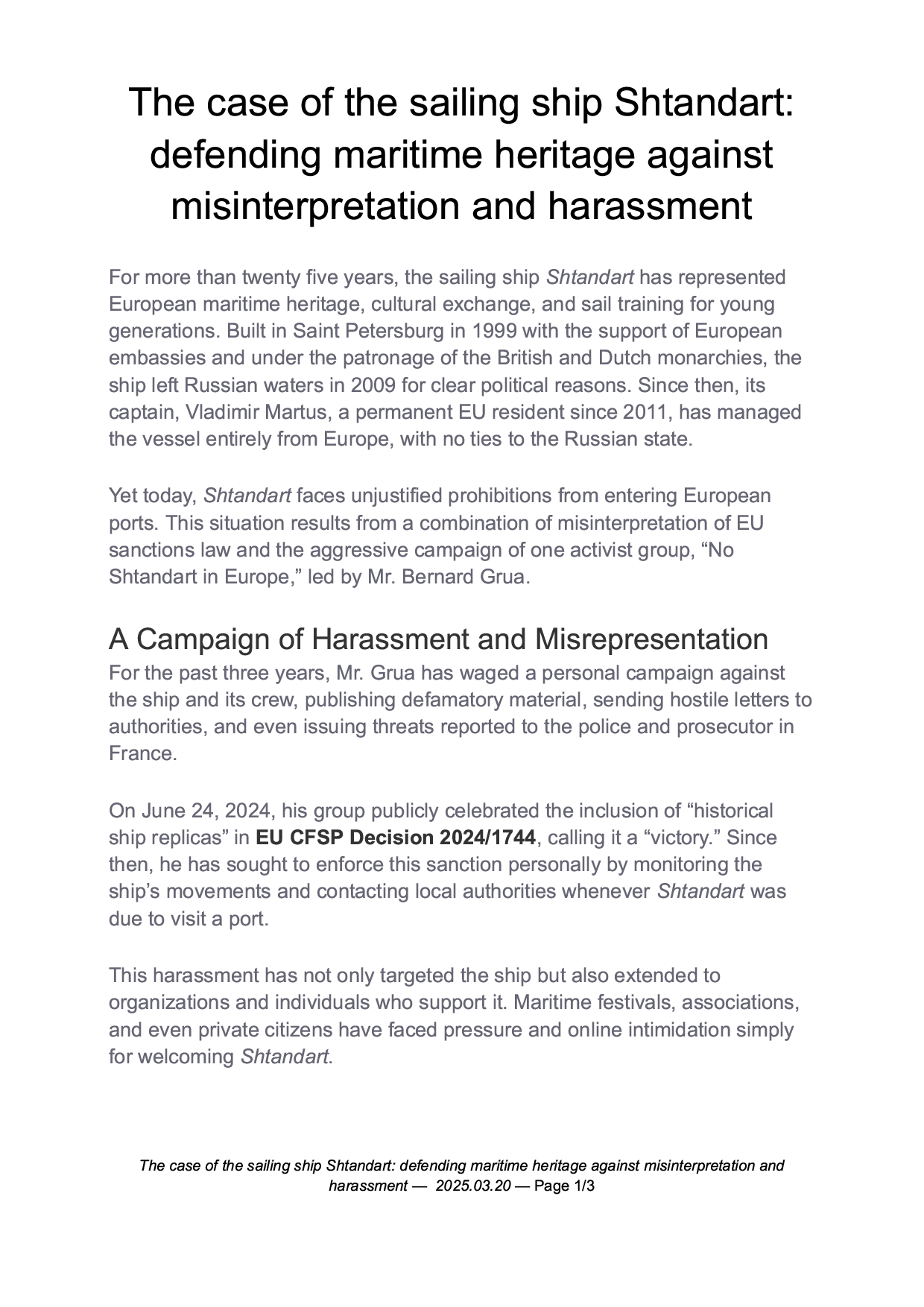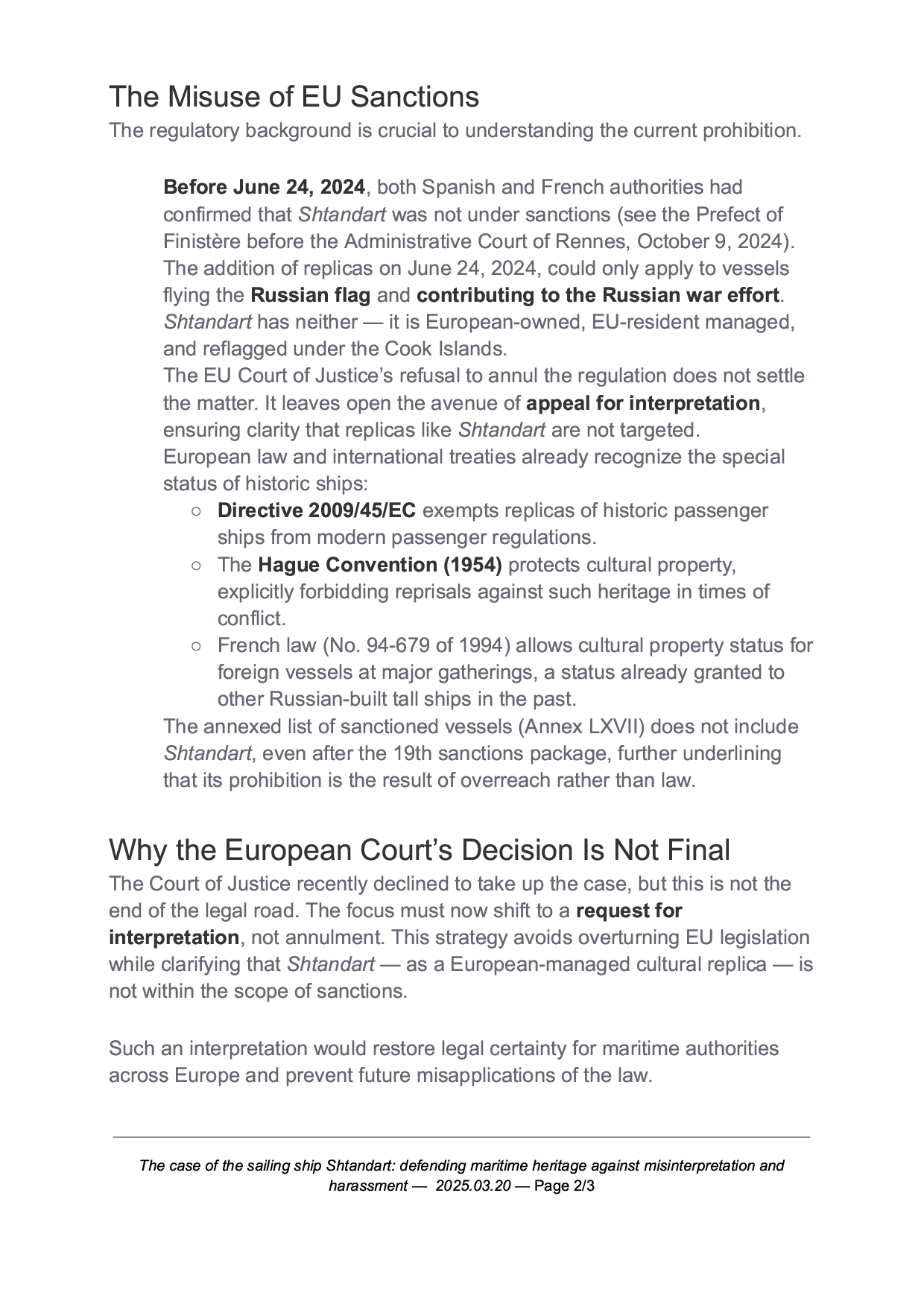
The website shtandart.eu has just published an article entitled “The Case of the Sailing Ship Shtandart: Defending Maritime Heritage Against Misinterpretation and Harassment.” This text devotes many pages to portraying the Russian frigate Shtandart as an innocent cultural project, while turning its attacks personally against me, Bernard Grua, spokesperson of the collective No Shtandart in Europe.
Let’s be clear: this article is 100% misleading. It mixes selective information, denial of sanctions, and unfounded accusations of “defamation” and “harassment.” But beyond the grand words, it brings nothing new and ignores the most basic facts established by European institutions and national courts.
Rather than answering every false claim, I prefer to make this piece public. Readers will then be able to see for themselves how far the promoters of the Shtandart go in order to escape the reality of sanctions and to discredit those who simply recall the law.
- The case of the sailing ship shtandart: defending maritime heritage against misinterpretation and harassment, by Vladimir Martus
- Conclusion, by Bernard Grua
- Attachments
- On the same topic
The case of the sailing ship shtandart: defending maritime heritage against misinterpretation and harassment, by Vladimir Martus
20 September 2025
For more than twenty five years, the sailing ship Shtandart has represented European maritime heritage, cultural exchange, and sail training for young generations. Built in Saint Petersburg in 1999 with the support of European embassies and under the patronage of the British and Dutch monarchies, the ship left Russian waters in 2009 for clear political reasons. Since then, its captain, Vladimir Martus, a permanent EU resident since 2011, has managed the vessel entirely from Europe, with no ties to the Russian state.
Yet today, Shtandart faces unjustified prohibitions from entering European ports. This situation results from a combination of misinterpretation of EU sanctions law and the aggressive campaign of one activist group, “No Shtandart in Europe,” led by Mr. Bernard Grua.
A Campaign of Harassment and Misrepresentation
For the past three years, Mr. Grua has waged a personal campaign against the ship and its crew, publishing defamatory material, sending hostile letters to authorities, and even issuing threats reported to the police and prosecutor in France.
On June 24, 2024, his group publicly celebrated the inclusion of “historical ship replicas” in EU CFSP Decision 2024/1744, calling it a “victory.” Since then, he has sought to enforce this sanction personally by monitoring the ship’s movements and contacting local authorities whenever Shtandart was due to visit a port.
This harassment has not only targeted the ship but also extended to organizations and individuals who support it. Maritime festivals, associations, and even private citizens have faced pressure and online intimidation simply for welcoming Shtandart.
The Misuse of EU Sanctions
The regulatory background is crucial to understanding the current prohibition.
- Before June 24, 2024, both Spanish and French authorities had confirmed that Shtandart was not under sanctions (see the Prefect of Finistère before the Administrative Court of Rennes, October 9, 2024).
- The addition of replicas on June 24, 2024, could only apply to vessels flying the Russian flag and contributing to the Russian war effort. Shtandart has neither — it is European-owned, EU-resident managed, and reflagged under the Cook Islands.
- The EU Court of Justice’s refusal to annul the regulation does not settle the matter. It leaves open the avenue of appeal for interpretation, ensuring clarity that replicas like Shtandart are not targeted.
- European law and international treaties already recognize the special status of historic ships:
- Directive 2009/45/EC exempts replicas of historic passenger ships from modern passenger regulations.
- The Hague Convention (1954) protects cultural property, explicitly forbidding reprisals against such heritage in times of conflict.
- French law (No. 94-679 of 1994) allows cultural property status for foreign vessels at major gatherings, a status already granted to other Russian-built tall ships in the past.
- The annexed list of sanctioned vessels (Annex LXVII) does not include Shtandart, even after the 19th sanctions package, further underlining that its prohibition is the result of overreach rather than law.
Why the European Court’s Decision Is Not Final
The Court of Justice recently declined to take up the case, but this is not the end of the legal road. The focus must now shift to a request for interpretation, not annulment. This strategy avoids overturning EU legislation while clarifying that Shtandart — as a European-managed cultural replica — is not within the scope of sanctions.
Such an interpretation would restore legal certainty for maritime authorities across Europe and prevent future misapplications of the law.
A Ship of Heritage, Peace, and Education
Far from being a political vessel, Shtandart is a floating classroom and cultural bridge:
- Training young sailors: Outside festivals, the ship operates as a sail training vessel, preparing youth for Europe’s maritime sector.
- International crew: Every voyage brings together people of different nationalities in cooperation and mutual respect.
- Cultural value: As a rare full-scale replica of an 18th-century frigate, Shtandart enriches maritime festivals and attracts thousands of visitors.
- Public support: More than 8,000 people have signed a petition defending the vessel, and organizations such as MOR GLAZ continue to support its presence in French ports.
In over two decades of visits, Shtandart has never caused public disturbances, only admiration and inspiration.
A Call for Maritime Authorities and the European Public
The current prohibition is not supported by law, nor by the principles of European cooperation, cultural heritage protection, or freedom of movement. It is the product of a misapplied regulation and an aggressive campaign of defamation by a single activist group.
We call on maritime authorities across Europe to:
- Recognize Shtandart as a European vessel of cultural and educational value.
- Allow her to continue participating in maritime festivals and port visits.
- Support efforts to obtain a legal interpretation clarifying that she is not under sanctions.
The Shtandart stands not for division, but for peace, unity, and heritage. Europe must not allow cultural property and educational projects to become collateral damage in political disputes.
Vladimir Martus
Russian captain and hidden owner of the TS Shtandart
Conclusion, by Bernard Grua
In the end, this article on shtandart.eu says more about the communication strategy of the Shtandart’s promoters than about reality.
By attacking me personally, it tries to distract from the essential: European sanctions apply to this vessel, and multiple states have already enforced them.
This so-called “open letter” is yet another example of Vladimir Martus’s strategy of victimisation inversion: pretending to be persecuted while systematically ignoring facts and court decisions. It is also consistent with his use of SLAPP procedures and judicial harassment against me, designed to silence criticism and intimidate citizens who simply recall the law.
As spokesperson of No Shtandart in Europe, I simply recall documented facts:
- Article 3ea of Regulation (EU) nº 833/2014, which provides the legal basis for the ban on Russian vessels, including replicas,
- the European Council clarification of June 24, 2024, confirming that replicas of historical ships are covered by sanctions,
- bans in most French ports, and in all ports of Ireland, the United Kingdom, Norway, Denmark, Spain, and Portugal,
- the additional decision by Spain and Portugal to prohibit the Shtandart from entering their territorial waters,
- unfavorable rulings by the Rennes Administrative Court and the Conseil d’État,
- and finally, the Court of Justice of the European Union decision of August 22, 2025, which confirmed beyond doubt that the Shtandart falls under EU sanctions.
No article, however lengthy or indignant, can erase these official decisions.
The public deserves clarity, not propaganda.
Bernard Grua
Spokesperson, No Shtandart in Europe
No Shtandart In Europe
Email: noshtandartineurope@gmail.com
Website: https://bit.ly/No-Shtandart
Facebook: groups/noshtandartineurope
WhatsApp
Attachments
Portugal
SIC Noticia, 25/09/2025:
TS Shtandart that is barred from entering European ports attempted to change its crew in Portugal. The Lagos Maritime Police say that the crew members intercepted (two French nationals, one Russian national based in Latvia and one Russian national) gave contradictory accounts.
Judicial harassment
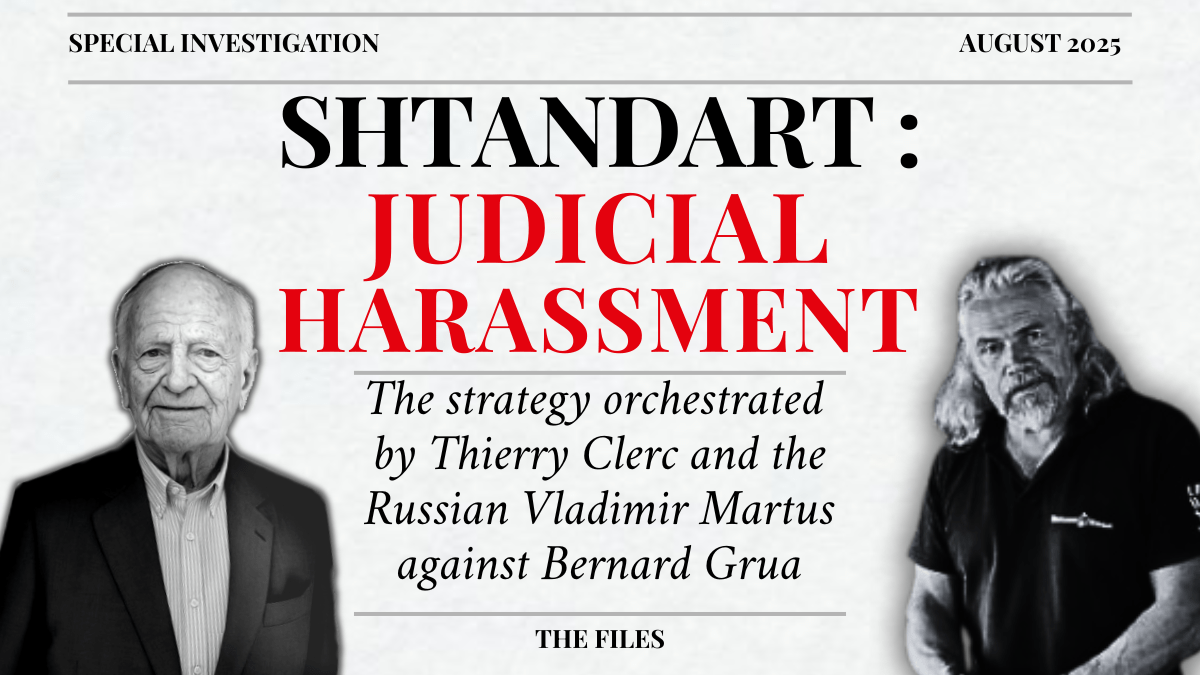
“Shtandart”: the judicial harassment strategy orchestrated by Thierry Clerc and the Russian Vladimir Martus against Bernard Grua
Since 2023, Thierry Clerc and Vladimir Martus have launched, against, Bernard Grua, the spokesperson of the collective No Shtandart in Europe, a series of legal measures: formal notices, police report, criminal complaint, interventions with French authorities, and public communication campaigns. All these initiatives, none of which succeeded in court, fit into a pattern that the…
Keep readingRussian foreign ministry

Ireland

Ille-et-Vilaine
On 23 August 2024, the Shtandart attempts an unannounced stopover in Cancale and is expelled by the police on the instructions of the Prefect of Ille-et-Vilaine.
Spain
Russian propaganda outlets
Interview with Vladimir Martus by Russian media outlet RBC. One of many interviews given to Russian propaganda outlets during the summer of 2024.
French military naval base