
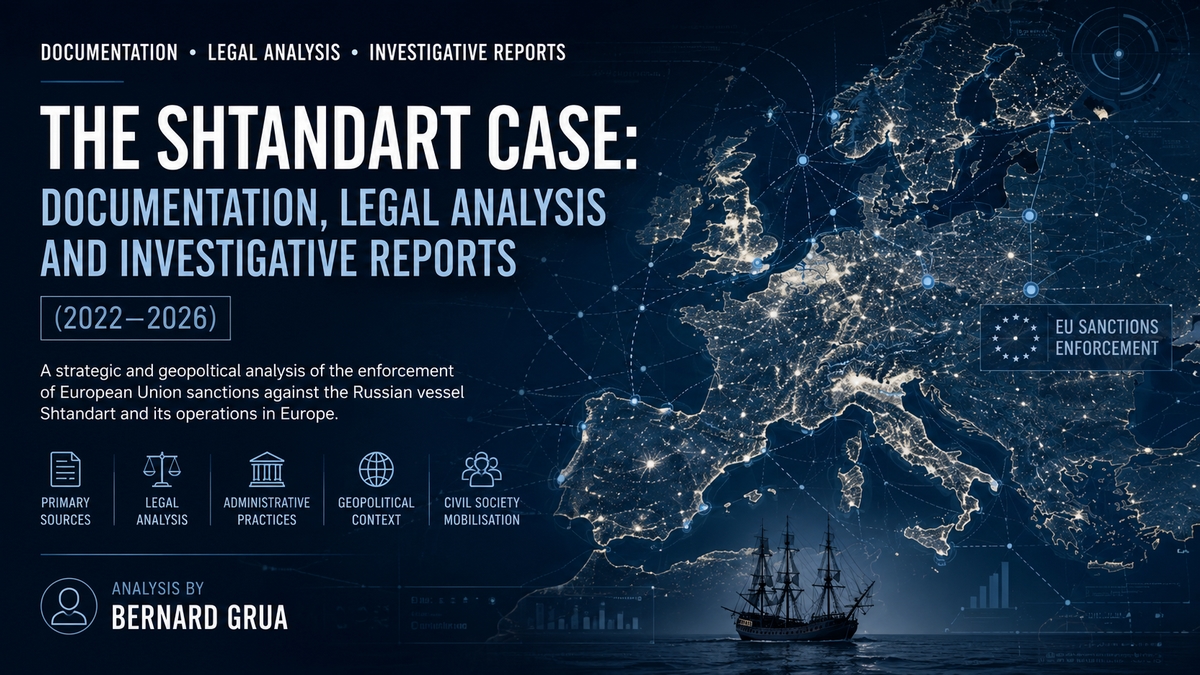
The documents collected on this page provide a structured record of the Shtandart case between 2022 and 2026.
They bring together legal analysis, documentary investigation, official correspondence, policy memoranda, and comparative reports based on primary sources relating to the implementation of European Union sanctions against the Russian vessel Shtandart.
Taken together, these materials examine the legal framework governing EU sanctions, the administrative decisions taken in France, the vessel’s access to European ports, and the broader institutional and societal dynamics surrounding enforcement.
While each report can be read independently, they form a coherent documentary archive of a multi-year regulatory and political process.
- The European Campaign (2022–2026)
- Ukrainian mobilisation and diaspora engagement
- Administrative waivers in France
- The La Rochelle case study
- Hybrid warfare and influence operations
- Judicial harassment and SLAPP dynamics
- Analysis of Vladimir Martus’ open letter
- European port restrictions (comparative report)
- The Final Resolution of the Shtandart Case (2026)
The following sections present the main dimensions of the case in a structured analytical sequence.
1. European Campaign (2022–2026)
This four-year analytical report combines documentary investigation based on primary sources, legal analysis, and the role of transnational civil society in the enforcement of European sanctions in the context of Russia’s war against Ukraine.
➡️ Read the full report
The campaign rapidly expanded beyond France through the mobilisation of Ukrainian organisations and the Ukrainian diaspora across Europe.
2. Ukrainian mobilisation and diaspora engagement
This document examines the sustained involvement of Ukrainian stakeholders, both in Ukraine and across the diaspora, in a coordinated mobilisation aimed at preventing the Russian vessel from circumventing European Union sanctions.
➡️ Read the full report
This international mobilisation unfolded against a backdrop of administrative decisions that raised broader questions about the implementation of EU sanctions in France.
3. Administrative practices and waivers in France
This report documents a series of administrative interpretations and exemptions related to the application of EU sanctions to the Shtandart. It distinguishes between official legal authorisations and confidential administrative practices.
➡️ Read the full report
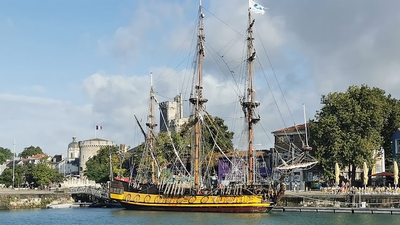
One of the clearest examples of these administrative practices is the case of La Rochelle.
4. Desk-Russie – The La Rochelle case study
Behind its public-facing maritime image, the case of La Rochelle illustrates a complex interaction between administrative practice, institutional coordination, and local decision-making in the enforcement of European sanctions.
➡️ Read the full report
Beyond local administrative decisions, the case also raises broader geopolitical questions.
5. Diploweb – Hybrid warfare and influence operations
This article provides a geopolitical analysis of the Shtandart as part of a broader context of influence operations in Europe. While officially presented as a cultural and educational project, it is examined here as a case involving soft power, sharp power, and hybrid influence strategies.
➡️ Read the full report
These dynamics were accompanied by sustained legal and communicative actions.
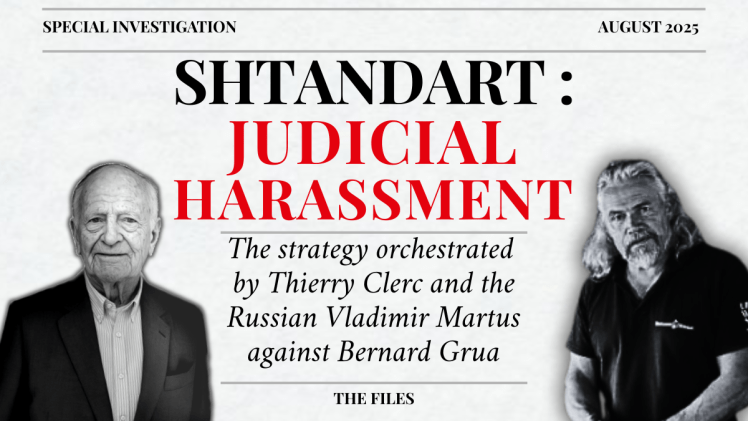
6. Judicial harassment and SLAPP dynamics
Since 2023, a series of legal and communicative actions involving Thierry Clerc and Vladimir Martus against No Shtandart in Europe have been documented. These actions are analysed in relation to the European framework on Strategic Lawsuits Against Public Participation (SLAPPs).
➡️ Read the full report
The public narrative developed by Vladimir Martus is further examined in the following section.
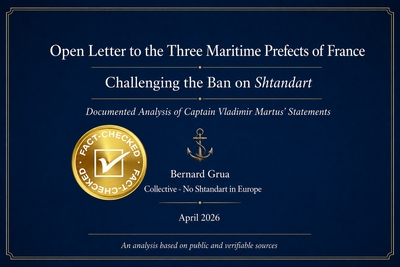
7. Analysis of Vladimir Martus’ open letter
This report examines an open letter addressed by Vladimir Martus to the three French maritime prefects. The statements contained in this document are assessed against primary sources, factual records, and legal texts. The document is of particular interest as it provides a virtually exhaustive account of the elements of Shtandart’s narrative aimed at exempting it from European sanctions.
➡️ Read the full report
This analysis is complemented by a comparative overview of European port restrictions.
8. European port restrictions (comparative analysis)
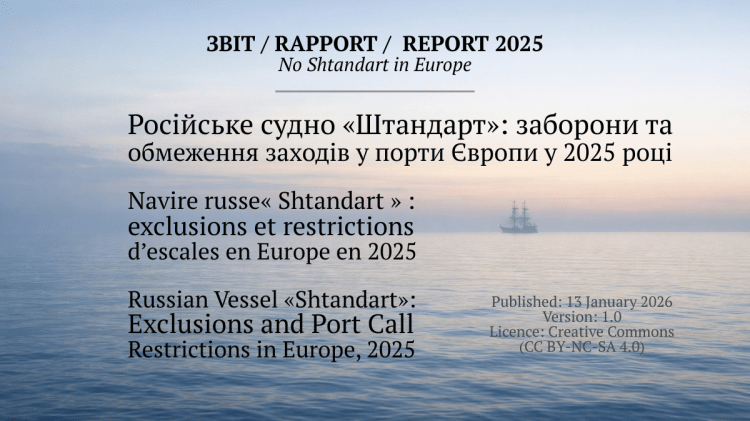
In 2025, the Shtandart was denied access or explicitly banned in seven European states, leading to the cancellation of multiple port calls and exclusion from international maritime events, including the Tall Ships Races.
➡️ Read the full report
The concluding section examines how these developments led to the final phase of the case in 2026.
9. Final resolution of the Shtandart case (2026)
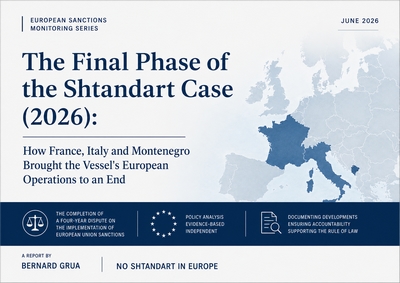
This concluding report documents how the successive decisions adopted by the French maritime authorities, the Italian Government and the Montenegrin authorities during the first half of 2026 ultimately brought the European operations of the Russian vessel Shtandart to an end. It completes Bernard Grua’s four-year documentary investigation into the implementation of EU sanctions.
➡️ Read the full report
Taken together, these documents form a structured record of the Shtandart case as it unfolded between 2022 and 2026..
Bernard Grua
No Shtandart In Europe
Email: noshtandartineurope@gmail.com
Website: https://bit.ly/No-Shtandart
Facebook: groups/noshtandartineurope
WhatsApp

